

Design of Frequency Bounded IWPT Systems under Sub-Resonant Control for Improved Misalignment Tolerance
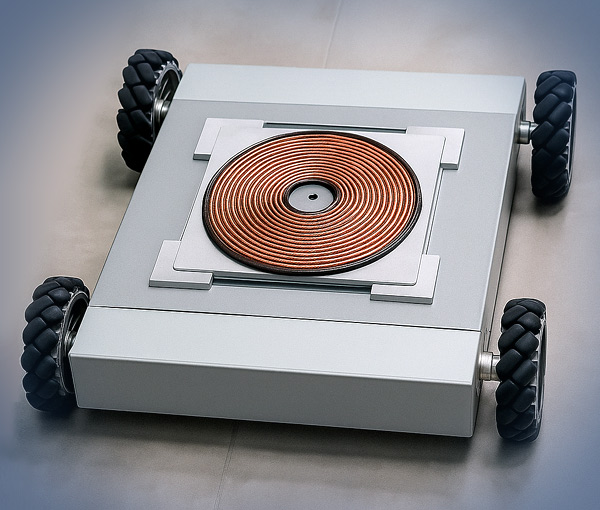
Growing demand for power transfer without physical contact has seen a surge in popularity for WPT systems both in applications where they may be safer and more convenient such as EV charging and in cases where environmental conditions may be too harsh for standard cable-based solutions.
Near field WPT systems are divided into two main categories, capacitive WPT which is mostly utilized for low power applications and inductive WPT (low and high-power applications) where two loosely coupled inductors form a loosely coupled transformer transferring power from primary to secondary side via magnetic field.
Since the power transfer capabilities of an LCT are rather limited, compensation networks of various complexity are used in order to overcome this limitation [9]. Complex topologies may improve performance however this often comes at the cost of more system components, lower reliability and complex analysis.
Integrated power and data transfer (SWIPT)
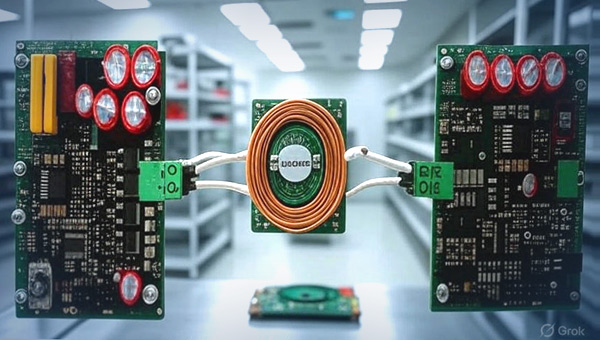 Wireless power transfer (WPT) can be integrated with communication, allowing devices to both receive power and exchange data. This is achieved through systems like Simultaneous Wireless Information and Power Transfer (SWIPT), which transmit both power and data at the same time, or by using a separate communication channel like Near Field Communication (NFC) to support WPT. These integrated systems are valuable for applications like implantable medical devices, which require a constant power supply and low-power communication without invasive surgery.